CtrlOps.
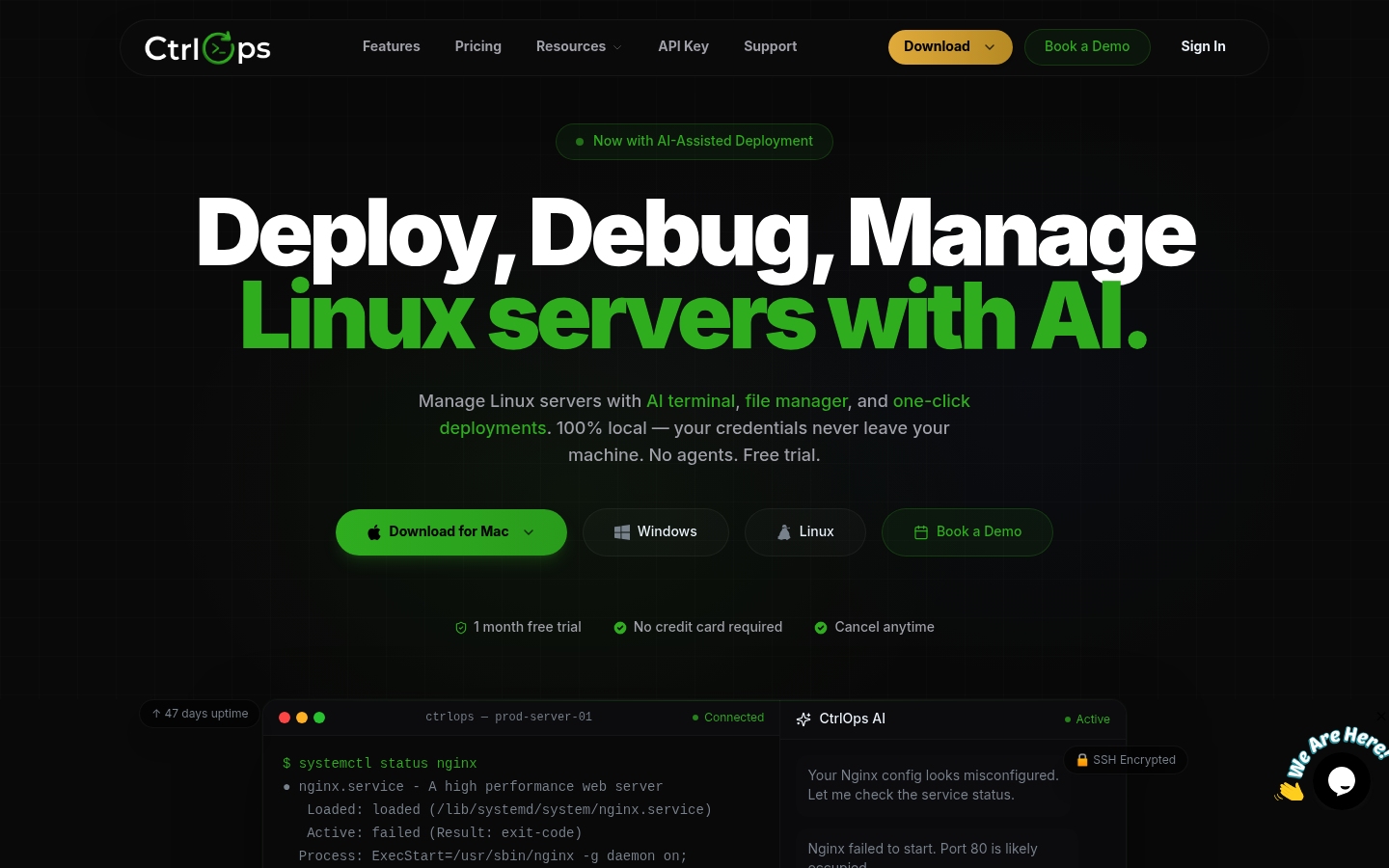
Deploy, debug & manage Linux servers with AI—no DevOps expertise needed. Local, secure, zero agents. Cut deployment time from 60 min to 5 min.
More About CtrlOps
CtrlOps – AI-Powered Server Management & DevOps Tool
CtrlOps transforms Linux server management with an AI-native desktop application that deploys, debugs, and manages your entire fleet from one secure interface. Unlike cloud-based dashboards, CtrlOps runs 100% locally—your SSH keys and credentials never leave your machine, giving you complete privacy without sacrificing intelligent automation.
Product Highlights
- AI Terminal: Convert natural language to precise bash commands, diagnose errors without sudo, and get context-aware suggestions explained in plain English
- Agentless Architecture: Connect to any Linux server via standard SSH without installing software on remote machines—works with AWS, GCP, Azure, DigitalOcean, and any VPS
- Native Performance: Desktop application built for speed, eliminating the lag of browser-based dashboards while supporting macOS (Apple Silicon & Intel), Windows, and Linux
- Privacy-First Design: Zero data sharing with encrypted local storage—no cloud keys required, only your SSH credentials
- One-Click Deployments: Streamlined deployment pipelines with sub-30-second average deploy times and integrated backup management
Use Cases
- Solo Developers: Manage personal projects and side-hustle servers without memorizing complex CLI commands or paying for expensive cloud management tools
- DevOps Teams: Consolidate PuTTY, WinSCP, and multiple dashboards into a single AI-assisted command center for fleet-wide operations
- Security-Conscious Organizations: Maintain complete data sovereignty with on-premise credential storage while still leveraging modern automation
- Multi-Cloud Infrastructures: Unified management across heterogeneous server environments without vendor lock-in or cloud-specific agents
Target Audience
CtrlOps serves individual developers, small-to-medium DevOps teams, and privacy-focused organizations who need powerful server management without cloud dependency or security compromises. Ideal for those transitioning from fragmented legacy tools to a modern, AI-enhanced workflow.
You might also like
See all alternatives →