FLUIX AI.
FLUIX AI mengoptimalkan pendinginan, daya, dan infrastruktur data center dengan agen AI on-premise. Tambah kapasitas komputasi tanpa menambah energi.
Lebih Lanjut Tentang FLUIX AI
FLUIX AI
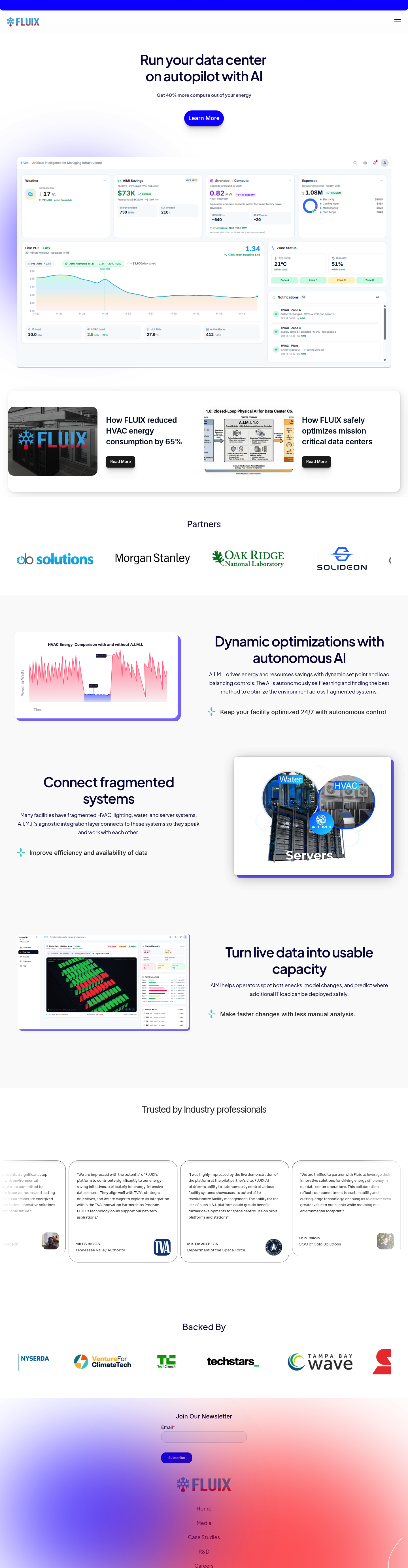
FLUIX AI adalah platform otonom berbasis kecerdasan buatan yang mengubah operasi pusat data dengan memberikan 40% lebih banyak kapasitas komputasi dari infrastruktur energi yang ada. Dengan menjalankan fasilitas secara otomatis menggunakan otomasi cerdas, FLUIX AI menghilangkan trade-off tradisional antara memperluas daya komputasi dan meningkatkan konsumsi energi.
Sorotan Produk
- Kontrol AI Otonom: Mesin A.I.M.I. yang belajar mandiri mengoptimalkan titik set dan kontrol keseimbangan beban secara dinamis di seluruh sistem terfragmentasi 24/7 tanpa intervensi manusia
- Efisiensi Energi: Mengurangi konsumsi energi HVAC hingga 65% sambil mempertahankan standar keandalan dan keselamatan misi kritis
- Integrasi Sistem: Lapisan integrasi agnostik menghubungkan sistem HVAC, pencahayaan, air, dan server yang berbeda ke dalam ekosistem cerdas yang terpadu
- Perencanaan Kapasitas Prediktif: Mengubah data operasional real-time menjadi wawasan yang dapat ditindaklanjuti untuk mengidentifikasi hambatan dan men-deploy beban IT tambahan dengan aman
Kasus Penggunaan
- Ekspansi Pusat Data: Skalakan kapasitas komputasi tanpa peningkatan infrastruktur listrik atau penambahan kapasitas daya
- Kepatuhan Keberlanjutan: Capai aspirasi net-zero dan penuhi tolok ukur lingkungan melalui optimasi energi yang didorong AI
- Operasi Misi Kritis: Optimalkan fasilitas Tier III/IV dengan aman menggunakan kontrol otonom yang menjaga uptime dan keandalan
- Manajemen Daya yang Sadar Grid: Ubah infrastruktur listrik menjadi sistem responsif yang beradaptasi dengan kondisi dan harga grid
Audiens Target
FLUIX AI melayani operator pusat data, penyedia colocation, perusahaan cloud hyperscale, dan tim infrastruktur IT perusahaan yang ingin memaksimalkan output komputasi sambil meminimalkan biaya energi dan dampak lingkungan. Sangat berharga bagi organisasi yang menghadapi keterbatasan daya, mandat keberlanjutan, atau permintaan pertumbuhan yang cepat.
Anda mungkin juga menyukai
Lihat semua alternatif →