
memi.
AI agents that run on your design files and research
macOS workbench where Claude, Codex & Hermes run on your specs, research & Figma files. Supercharge your product design workflow with AI agents.
Rank
▲ #33Votes
111Platform
Web / MobileLaunched
Recently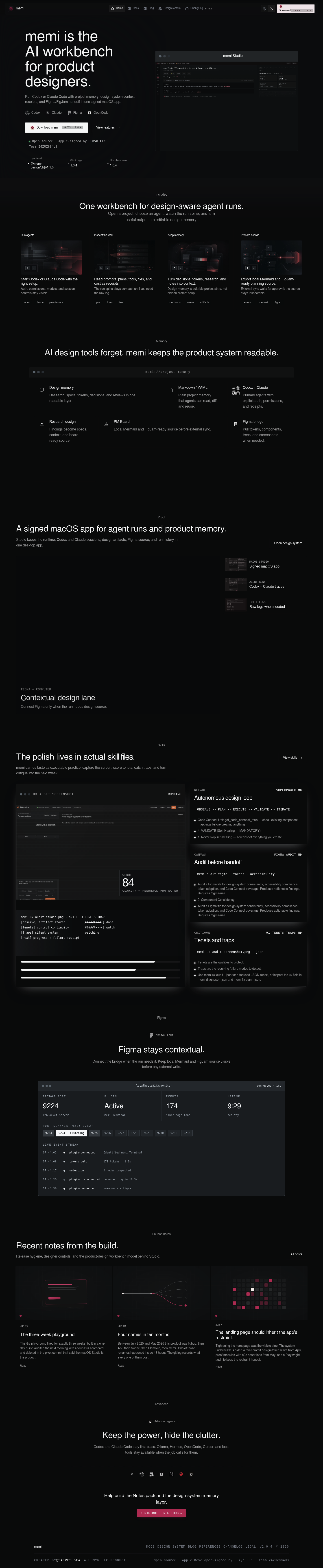
Favorite — quick open from Home.
More About memi
memi
memi is the AI workbench built specifically for product designers who need transparency and control over agent-powered workflows. It transforms chaotic AI outputs into readable, editable design memory that teams can actually trust and iterate on.
Product Highlights
- Design-Aware Agent Orchestration: Run Codex and Claude Code with visible auth, permissions, models, and session controls that stay inspectable throughout the process.
- Readable Run Spine: Access prompts, plans, tools, files, and cost receipts in a compact, expandable format—no hidden prompt soup or black-box outputs.
- Editable Design Memory: Convert decisions, tokens, research, and notes into structured, diffable project state using Markdown and YAML that agents can reuse.
- Local-First Planning Exports: Generate Mermaid diagrams and FigJam-ready source locally, with external sync waiting for explicit approval.
- Figma Bridge Integration: Pull tokens, components, trees, and screenshots on demand via WebSocket connection, keeping design source contextual and inspectable.
- Executable Skill Files: Capture design taste as code—run UX audits, score tenets, detect traps, and turn critique into actionable iterations.
Use Cases
- Agent-Assisted Design Systems: Product designers run Codex or Claude Code through memi to generate components, with full visibility into prompts and costs, then validate outputs against design tenets before committing.
- Cross-Functional Design Documentation: Teams export Mermaid architecture diagrams and FigJam boards from structured project memory, ensuring stakeholders review inspectable source before external sync.
- Design System Audits: Designers execute
memi audit figmato check token adoption, accessibility compliance, and Code Connect coverage, producing actionable findings with screenshot evidence. - Autonomous Design Loops: Solo practitioners configure
SUPERPOWER.mdskills to run observe-plan-execute-validate-iterate cycles, with self-healing validation via mandatory screenshots.
Target Audience
memi serves product designers and design system leads who demand accountability from AI tools—professionals building complex, multi-platform products where design decisions must remain readable, diffable, and reusable across team workflows.
You might also like
See all alternatives →